
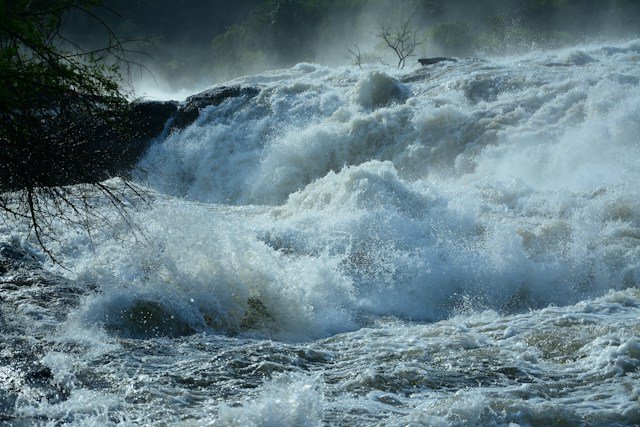
For generations, the River Nyamwamba was a source of life. Flowing down from the icy, glaciated peaks of the Rwenzori Mountains, it carved a serpentine path through the valleys, providing fresh water for crops, livestock, and the bustling communities of Kasese District.
But in recent years, this life-giving river has transformed into a terrifying, destructive force. Fueled by increasingly extreme weather patterns linked to climate change and the rapid melting of the high-altitude glaciers, the river’s volume has become unpredictable.
Compounding this is the severe upstream deforestation. Without the natural “sponge” effect of dense forest roots to hold the soil and absorb the heavy rains, the water simply rushes off the steep mountain slopes. When the heavy rains fall, the river violently breaches its banks, turning into a raging torrent of mud, boulders, and debris.
A Community in Trauma
The impact on Kasese has been catastrophic. In recent years, flash floods have swept away entire neighborhoods, destroyed vital bridges connecting remote villages to the city, and severely damaged essential infrastructure, including the historic Kilembe Mines Hospital.
Beyond the physical destruction of homes and farmlands, the emotional trauma runs deep. Every time the heavy rains begin to fall, a wave of anxiety sweeps through the valley communities, fearing another midnight evacuation.
“We cannot stop the rains from falling, but we can change how the mountain handles the water. The answer to rebuilding our community lies in the roots of the forest.”
Nature’s Defense Mechanism
At the 6Summits Rwenzori Community Foundation, we recognize that engineered concrete walls alone cannot tame the Nyamwamba. Long-term climate resilience requires ecological restoration. In response to the crisis, we have mobilized local community task forces to initiate a massive riverbank stabilization project.
Our primary weapon in this fight? Bamboo.
Bamboo is a miracle plant for riverine environments. It is incredibly fast-growing, meaning it can establish a defensive line much quicker than traditional hardwood trees. More importantly, bamboo possesses a dense, complex, and interlocking root system. As these roots spread beneath the soil, they create an unbreakable natural net that binds the earth together, drastically reducing soil erosion and the risk of landslides.
A Green Wall of Hope
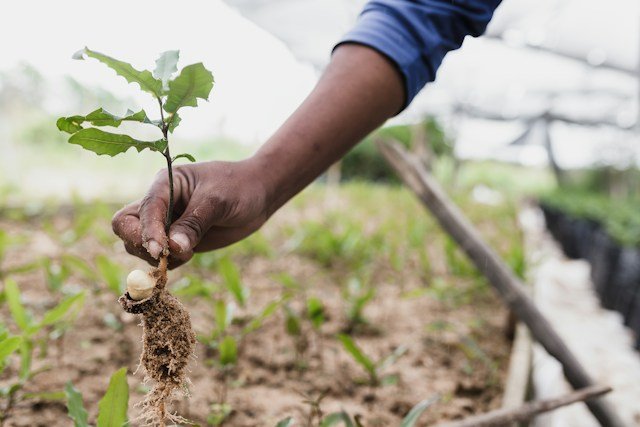
Alongside the bamboo, our task forces are planting thousands of indigenous trees to restore the broader watershed canopy. This newly restored vegetation acts as a natural speed bump, slowing down the surface runoff before it can violently enter the main river channel.
By employing local men and women to grow the seedlings in community nurseries and plant them along the fragile riverbanks, we are not only protecting the landscape but providing vital employment in the wake of the floods.
The River Nyamwamba will always be a powerful force of nature. But by working hand-in-hand with the local community to restore the protective forests along its banks, we are helping Kasese rise from the floods and build a safer, more resilient future.