
For generations, the steep, emerald slopes of the Rwenzori Mountains presented a harsh economic reality for the Bakonzo people. With limited agricultural land and few employment opportunities, the quickest way to feed a family or pay school fees was to look to the forest. Trees were cut down indiscriminately for timber or burned slowly in the earth to make charcoal.
This deforestation was born out of necessity, not malice. However, the environmental cost was devastating. Stripping the mountainside of its deep-rooted indigenous trees left the slopes unstable, leading to catastrophic landslides during the rainy seasons and a rapid decline in the region’s unique biodiversity.
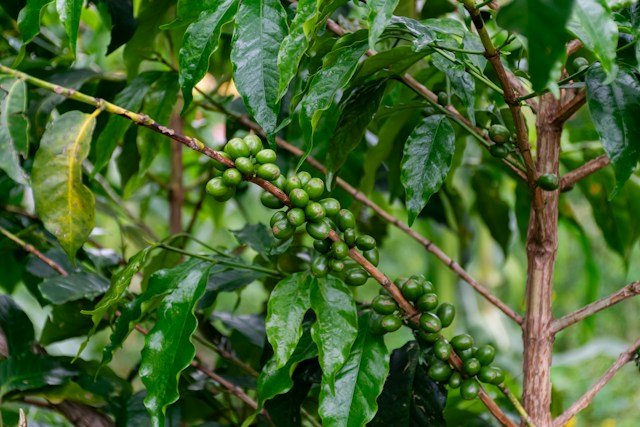
But today, a quiet, powerful revolution is taking place in the foothills—one fueled by a small, red cherry.
The Symbiosis of Shade-Grown Arabica
The high altitudes (ranging from 1,500 to 2,200 meters) and rich, volcanic-like soils of the Rwenzori make it one of the finest environments on earth for growing premium Arabica coffee. However, unlike sun-tolerant crops, high-quality Arabica is incredibly sensitive. It thrives best under a canopy of shade.
This botanical preference has become a massive catalyst for conservation. To grow the best coffee, farmers must grow trees.
Instead of clearing the forest, Bakonzo farmers are actively planting thousands of indigenous shade trees—such as the fast-growing Cordia africana and various Ficus species—to protect their coffee bushes from the scorching equatorial sun and harsh mountain winds.
“By transitioning to high-quality Arabica coffee, farmers are discovering a profound new truth: the forest is significantly more valuable standing than it ever was cut down.”
A Cup of Climate Resilience
The benefits of this shift extend far beyond the coffee cup. The restored tree canopy acts as a natural umbrella, softening the impact of heavy rains. The deep roots of the shade trees anchor the fragile mountain soil, drastically reducing the risk of deadly landslides and preventing agricultural runoff from polluting the rivers below.
Furthermore, the leaf litter from the canopy provides natural, organic mulch, enriching the soil and eliminating the need for expensive, harmful chemical fertilizers.
Supporting the Revolution
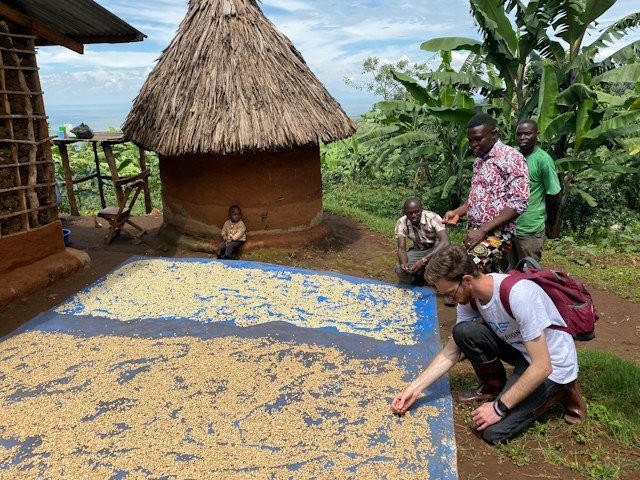
At the 6Summits Rwenzori Community Foundation, we are proud to support this sustainable transition. We work directly with local Bakonzo coffee cooperatives, providing them with indigenous tree seedlings, agricultural training, and access to fair-trade markets.
Because specialty coffee commands a much higher price on the global market than standard cash crops, household incomes in the participating villages have risen significantly. Families can now afford education, healthcare, and home improvements without ever needing to lift an axe against the old-growth forest.
Every tree planted and every coffee bush harvested proves that when conservation aligns with economic empowerment, both the people and the mountains can thrive.